
 Facebook
 X
X
 Pinterest
 Copy Link
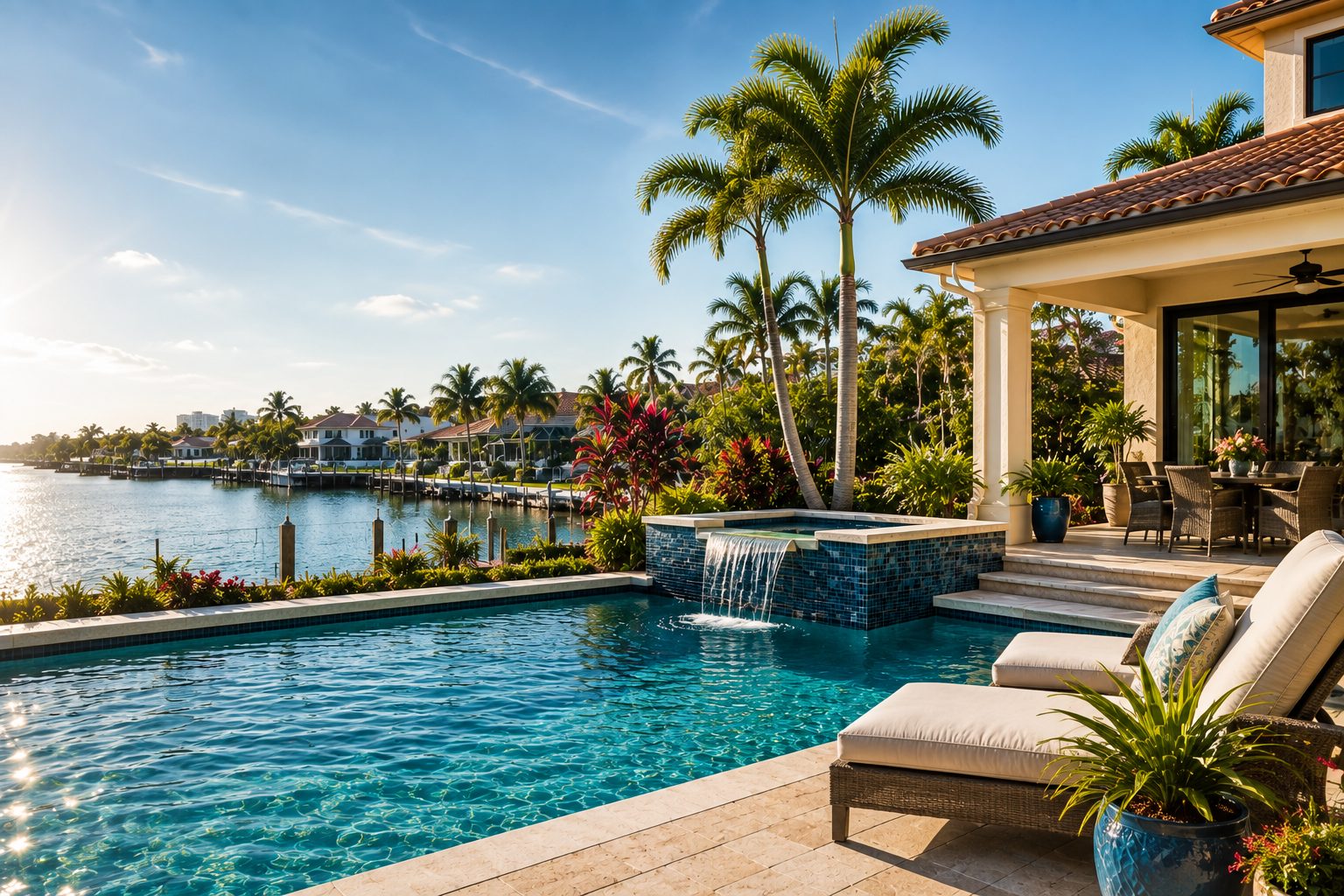
A swimming pool is high on the wish list for plenty of people buying a home in Florida. And understandably so. If you’re moving here for the weather and outdoor lifestyle, having your own pool can be a pretty attractive proposition.
But there’s an important question to ask when comparing Florida homes:
How much is a pool actually worth?
Whether you’re deciding how much extra to pay for a home with a pool or considering buying a home without one and installing a pool later, I’d look at three things: the neighborhood, the value and how much you’ll actually use it.
1. Are Pools Expected in the Neighborhood?
The first thing to understand is that the value of a pool isn’t the same everywhere in Florida.
In some Sarasota neighborhoods, pools are extremely common. If you’re looking at similar homes and the majority have private pools, buying one without a pool could potentially affect its appeal when you eventually come to sell.
In other communities, a private pool may be far less important. This can be particularly true where residents already have access to good community amenities and a resort-style pool.
That’s why I’d avoid making blanket statements about how much value a pool adds to a Florida home.
Real estate is local….. and pool value is no different.
2. How Much More Are Buyers Actually Paying for a Pool?
This is where the numbers become important.
Imagine you’re comparing two broadly similar Sarasota homes. One has a pool and the other doesn’t.
How much more are buyers actually paying for the pool home?
That’s a much more useful question than asking how much the pool originally cost to install.
For example, if installing a new pool would cost you $80,000, that doesn’t automatically mean your property will be worth $80,000 more once it’s finished.
Buyers determine market value, not the construction invoice.
If you’re buying a home and considering adding a pool later, I’d therefore look at recent comparable sales of homes with and without pools in that particular neighborhood.
You may discover that buying a home where somebody else has already paid to install the pool makes more financial sense.
3. Would You Still Want the Pool If You Didn’t Get All Your Money Back?
This might actually be the most important question.
Suppose you buy a Florida home without a pool and later spend tens of thousands of dollars installing one.
Would you still be happy with that decision if you knew you weren’t going to recover the entire cost when you eventually sold?
If the answer is yes, that’s completely reasonable.
You’re not just buying a financial asset. You’re buying somewhere to live.
If you’re going to spend years swimming, entertaining outside and enjoying your backyard, the return you’re getting isn’t purely financial.
But if your only reason for installing a pool is that you believe you’ll make money from it when you sell, I’d be much more cautious.
What Does It Cost to Own a Pool in Florida?
There’s another number buyers need to consider beyond what they’re paying for the house: the ongoing cost of owning the pool.
A private pool isn’t a one-time expense. In Florida, it’s something you’ll be maintaining year-round.
Your actual costs will vary considerably depending on the size and type of pool, its age and condition, whether you maintain it yourself and how much you use features such as heating.
Typical expenses can include:
- Pool cleaning and chemical treatment – either your own chemicals and equipment or a regular pool service.
- Electricity – your pool pump and filtration system need to run regularly, and heating can add considerably more.
- Water – particularly during hot, dry periods when evaporation means the pool needs topping up.
- Repairs and equipment – pumps, filters, heaters and automation systems won’t last forever.
- Resurfacing – eventually, the pool’s interior finish will need replacing.
- Pool cage and screen repairs – particularly relevant for many homes here in the Sarasota area.
- Insurance – a pool can also affect your homeowners insurance, so it’s worth checking with your insurer before buying.
None of this necessarily means owning a pool is prohibitively expensive. Plenty of Florida homeowners consider the cost completely worthwhile for the use and enjoyment they get from it.
But as a buyer, I’d want to understand both the immediate condition of the pool and the likely longer-term costs.
If I’m showing a buyer a home with an older pool, for example, I’m not just looking at how good it looks in the listing photos. I’d want to know the age and condition of the equipment, when it was last resurfaced and whether there are any obvious repairs on the horizon.
That’s particularly important when comparing two properties.
A house with a beautiful pool might initially appear to justify a higher price, but if that pool is approaching the point where it needs significant work, the financial equation can change pretty quickly.
Is It Better to Buy a Florida Home With a Pool?
If a pool is something you definitely want, buying a home that already has one can be worth considering before deciding to install one yourself.
You can compare the premium being paid for existing pool homes against the likely cost, disruption and time involved in adding one later.
Of course, an existing pool also needs proper due diligence. Buyers should consider its age and condition along with the pool equipment, surface, enclosure and any repairs or maintenance that may be required.
A beautiful pool isn’t necessarily a good deal if you’re inheriting significant expenses.
The Three Things I’d Consider Before Buying
If you’re looking at homes in Sarasota or elsewhere in Florida and a pool is on your wish list, remember three things:
Neighborhood. Value. Enjoyment.
Look at whether pools are typical for the neighborhood. Look at what comparable pool homes are actually selling for. Then decide how much having your own pool is worth to you.
And don’t forget the ongoing cost of ownership. A pool that has been well maintained with newer equipment is a very different proposition from one that’s likely to need resurfacing, a new pump or significant repairs shortly after you move in.
Because the right question isn’t simply:
“Does a pool add value to a Florida home?”
It’s:
“Does having a pool make sense for this particular home, in this particular neighborhood, at this particular price?”
And that’s a much better question to answer before you buy.
